
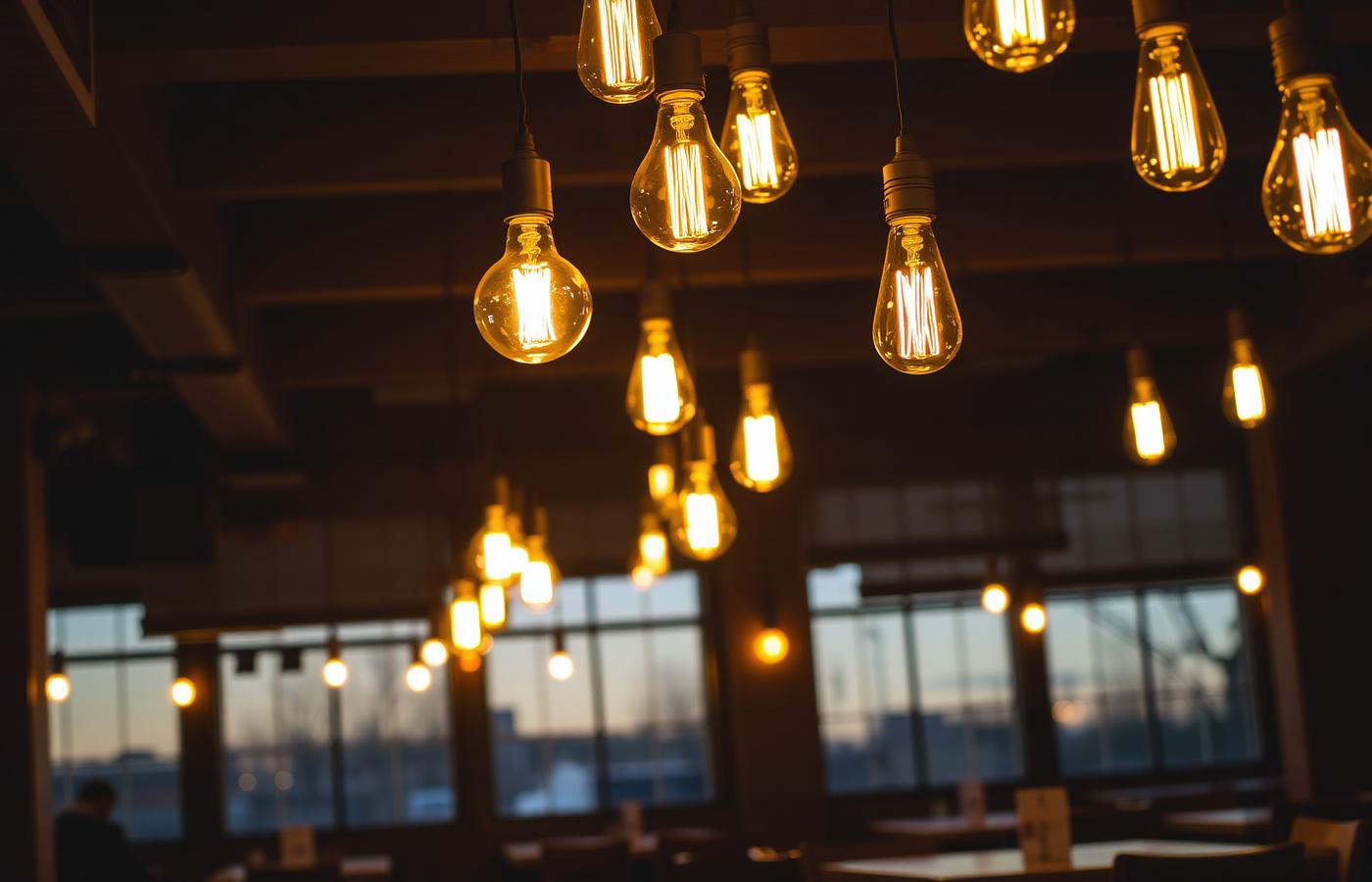
A room-by-room plan for reducing residential lighting energy consumption by 70% while maintaining warmth, dimming flexibility and design intent.
A typical Western household in 2020 consumed roughly 2,000 kWh per year on lighting alone. Complete conversion to modern LED filament lamps typically reduces that figure to under 400 kWh — a saving of roughly 1.5 tonnes of CO₂ per household per year in a coal-heavy grid.
Room by room: living areas benefit from a mix of 2700K ambient and dimmable 2200K accent. Kitchens want 3000K task lighting above work surfaces with 2700K ambient over dining. Bedrooms should stay at 2200–2700K and be fully dimmable to protect circadian rhythm.
The single highest-impact change is retrofitting hallway and stairway fixtures, which run for the largest fraction of hours per day. A 60W incandescent left on for six hours a day consumes 130 kWh a year; the LED equivalent, 17 kWh.
Modern LED filament technology has effectively erased the historical trade-off between efficiency and aesthetic. The warm glow of an Edison-shaped filament bulb at 2200K is indistinguishable, at normal viewing distance, from the tungsten it replaces.