
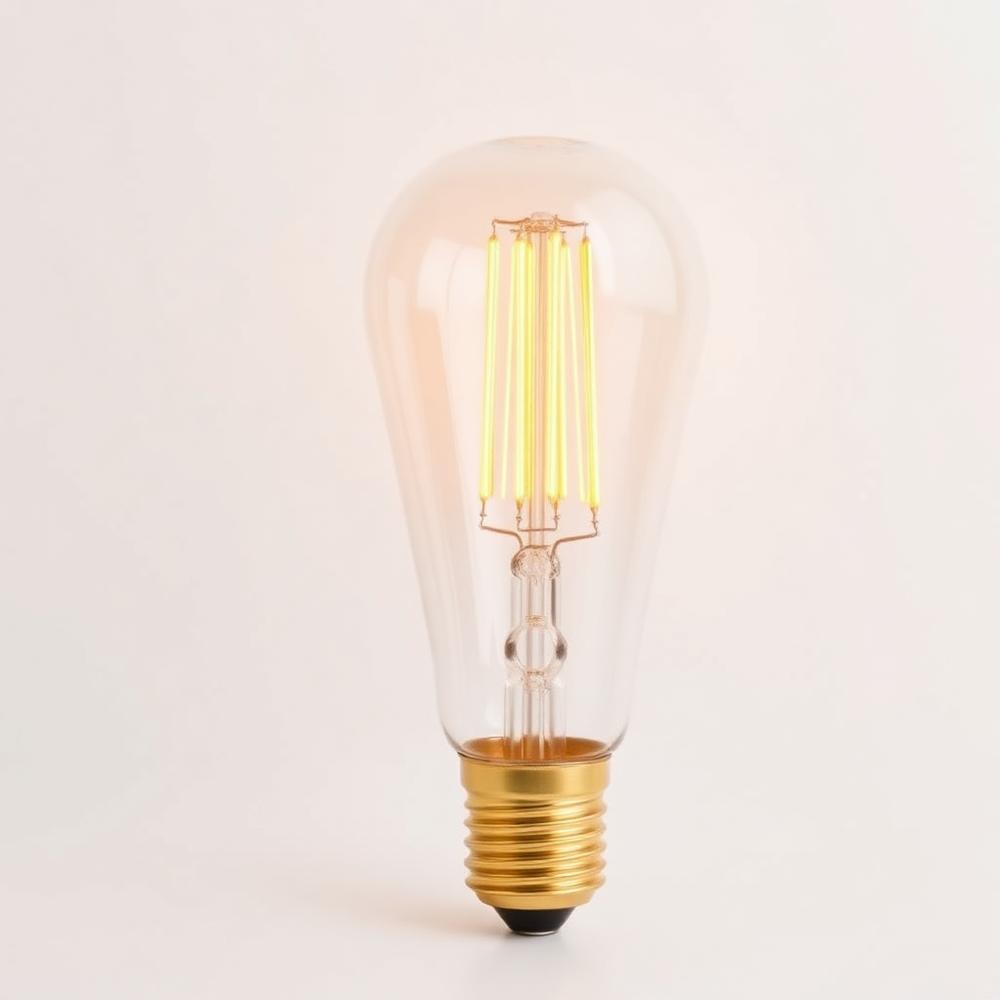
Wattage vs. lumens, colour temperature, CRI, base types, dimming compatibility — the twelve specifications every purchaser should verify before placing an order.
Start with lumens, not watts. A modern LED filament bulb producing 800 lumens uses roughly 8W; the incandescent equivalent used 60W. Reading a lamp's lumen output on the box is now the only meaningful measure of how bright it will feel.
Colour temperature is measured in Kelvin. 2200K is the deep amber of a candle, 2700K matches classic incandescent, 3000K is a neutral warm white, 4000K is neutral, and 6500K is daylight. For interiors, 2200–2700K is almost always the correct answer.
CRI — the Colour Rendering Index — describes how accurately a lamp reveals colour. Anything above 80 is acceptable for domestic use; above 90 is required for retail display, galleries and colour-critical work.
Base compatibility matters. E27 (Europe) and E26 (North America) are the world's two most common Edison-screw sizes and are physically interchangeable. E14 and E12 are their small-candelabra siblings. Bayonet B22 is common in the UK and former Commonwealth markets.
Finally, verify dimming compatibility. Not every LED bulb is dimmable, and even a dimmable bulb requires a compatible leading- or trailing-edge dimmer for smooth performance.